HOP articles, stories and insights
Universal Design for Learning for Inclusive Hybrid Sessions
Author: Antonio Vílchez
Illustrations: Magnific, Sigds,
Licence to (re)use the text of the article: Creative Commons BY-NC-SA 4.0
Publication date: June 2026
Listen the the HOP podcast episode "Universal Design for Learning"
Abstract
As hybrid youth work becomes increasingly popular across Europe, many youth workers still face challenges in designing inclusive and accessible workshops for all participants, regardless of their background, circumstances, or whether they join from a youth centre or through a video conference.
The concept of Universal Design for Learning (UDL) plays a key role in inclusion and diversity, which are among the core principles and priorities of the Erasmus+ programme. UDL encourages youth workers to create flexible learning environments that respond to individual learning differences from the outset. Based on recent years of experience in implementing activities with young people and testing various educational approaches, this article presents seven free and open-source digital tools inspired by UDL principles. These principles include providing multiple means of engagement, representation, and expression to make learning more accessible and inclusive. The aim is to transform hybrid sessions from potentially exclusionary experiences into spaces where diversity becomes a strength and every participant has an opportunity to engage, contribute, and benefit.
Introduction
There is a widespread misconception about the idea of fixed “learning styles” — the belief that individuals learn better when content is delivered according to their preferred style. However, research suggests that all learners benefit from exposure to multiple modes of learning and engagement rather than a single preferred approach (Pashler et al., 2008; Rogowsky et al., 2020).
At times, facilitators may unintentionally reinforce this misconception by labelling someone as “a visual learner” or another specific type of learner. Such labels can discourage individuals from developing new skills and engaging with different ways of learning. In fact, the brain is not designed to learn through only one method; rather, it functions as a dynamic and interconnected system that benefits from varied forms of input (Tokuhama-Espinosa, 2018).
This is particularly relevant in hybrid youth work, where participants engage in different settings and through different formats. Universal Design for Learning (UDL) offers a framework for creating flexible learning environments that accommodate individual learning differences. Developed by CAST (Center for Applied Special Technology) in the 1990s, UDL promotes inclusive educational practices by providing multiple means of engagement, representation, and expression.
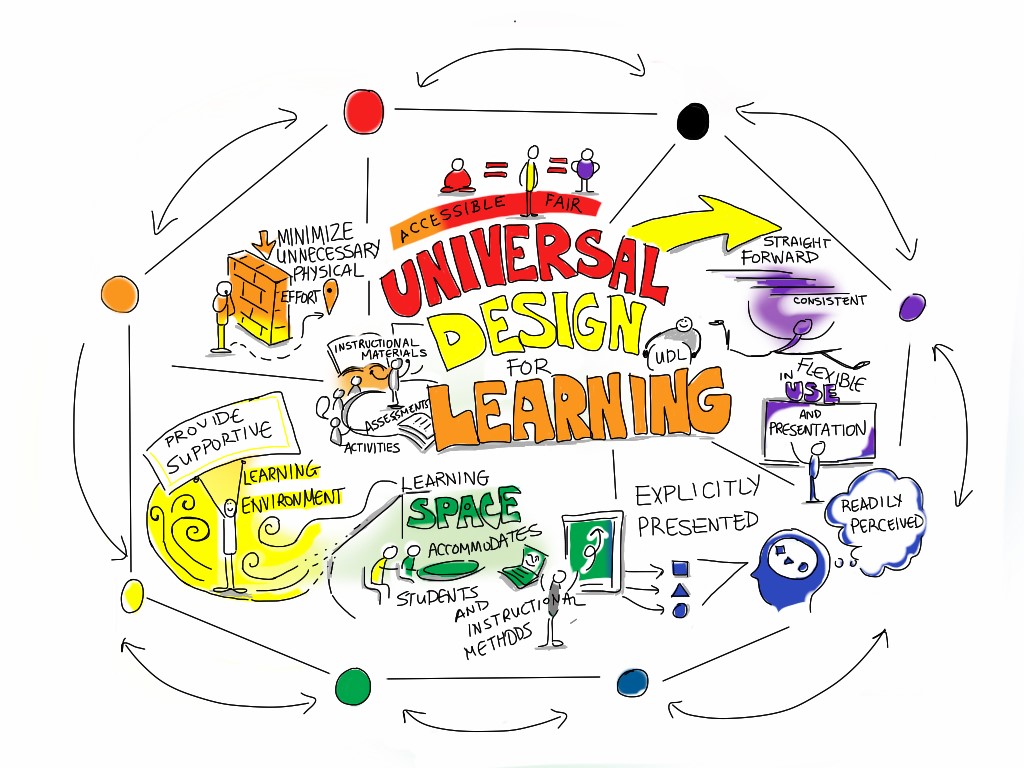 The principles of UDL can be used as a method to transform hybrid youth work into an opportunity for inclusion. And the tools listed in the article are open-source and free and accessible. Through practical examples and case studies, beginner hybrid facilitators can gain actionable strategies for creating sessions where every young person can participate meaningfully.
What differs among learners is not their hardwired style, but their interests, prior knowledge, cultural backgrounds, and the specific barriers they face in any given learning environment. There are three principles to develop a session with UDL:
- Firstly engagement, because it sustains motivation by offering choice, ensuring relevance, varying challenge and creating safe, cross-format collaboration.
- Second is the representation, that delivers content through multiple channels such as text, audio, visuals…
- Third and last is action and expression, that focus at how participants demonstrate learning, replacing outputs with flexible options for sharing, reflecting, and creating.
These principles are not a completion checklist, but lens through which one can continuously examine practice. The goal is not to do everything at once, but to progressively build more flexible, inclusive hybrid sessions.
 7 tools that work
The following tools have been chosen based on practice and experience for real use cases and also for being open source, that aligns with UDL principles. They are compatible with both Windows and Android devices, ensuring accessibility for participants regardless of their hardware.
Tricider is for structured decision-making and inclusive brainstorming. It offers choice in how to contribute, reduces barriers for those uncomfortable in speaking, and creates a persistent record for asynchronous participation. It is also available for Windows and Android and it doesn’t require any registration.
Excalidraw is excellent for visual collaboration without the pressure of "professional" design. It is great by mixing visual + textual + spatial representation in one tool; ideal for neurodiverse learners who think in images.
CryptPad offers spaces for privacy-first collaboration on sensitive topics. It gives a chance to work on sensitive topics using encrypted systems, so participants are more open to share knowing that their info is well secured.
Jitsi Meet is an ethical alternative to commercial video platforms: no accounts, no time limits, no surveillance. Breakout rooms, collaborative notes, and low-bandwidth mode built in. It offers reliable, ethical video conferencing. It has accessibility features including live captions and low-bandwidth mode.
Etherpad loads instantly, offers colour-codes contributing modes, and exports anywhere. It is ideal for multilingual groups in need of a shared reference point.
Drawio.io is a platform for visual thinking without complexity. It offers spatial diagrams and supports learners who process information visually. It is also available offline.
Penpot lets youth to create professional infographics using open standards. It is vector-based, collaborative, and free, ideal for visual summaries of learning.
Tricider in practice
To illustrate UDL in action, here is a detailed example of Tricider. It requires zero technical skills, works instantly on any device, and addresses one of the youth work's most common challenges: making decisions inclusively when participation is hybrid.
A workshop on "Digital Wellbeing" includes 10 participants who are present and 10 online. With a traditional model, in a moment of question, participants who are in-person, particularly those confident, will dominate the discussion, while online participants might struggle to jump in.
- The UDL redesign took four simple steps:
Set up a question in Tricider: Which topics should we prioritise? Share the link, there is no registration required. - Transparent voting identified the top four topics through a process that gave equal weight to every participant, regardless of location, confidence, or connectivity.
- A youngster, who was participating mentioned: I could add my ideas when I felt ready. Seeing others vote for my topic made me feel valued. That's UDL in action.
A checklist to consider when preparing a workshop with UDL:
Before: does this session offer at least two ways to engage, access content, and share learning? Have I tested the tools on a phone, not just a laptop?
During: Am I describing visuals aloud for those with poor connections or visual impairments? Am I allowing thinking time before asking for responses?
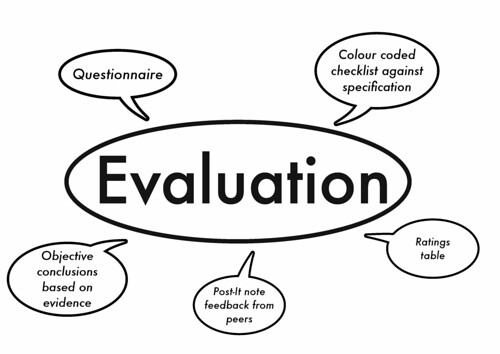
After: Did I ask participants what worked and what didn't? What tool or method will I try next time?
 Why is this relevant?
UDL shifts the question from "What's wrong with this participant?" to "What's limiting in my design?" That's more than a methodological tweak—it's a values alignment. European youth work stands for participation, inclusion, empowerment. UDL gives us a practical framework to live those values in hybrid spaces.
Conclusions
Now you can start only by using one principle, one tool, one session. Gather feedback and repeat. There is no need to be a tech expert, just curious, reflective, and committed to be inclusive by using different learning methods with digital tools.
Inclusion is the base of Erasmus+ programme and UDL can support especially youth participants with fewer opportunities, who can connect, process and express their thoughts while being actively valued, not just tolerated. UDL gives us a practical, values-driven framework to build exactly that: participation, empowerment, and respect for diversity from the beginning.
References
- CAST (2018). Universal Design for Learning Guidelines version 2.2. http://udlguidelines.cast.org
- Pashler, H., McDaniel, M., Rohrer, D., & Bjork, R. (2008). Learning styles: Concepts and evidence. Psychological Science in the Public Interest, 9(3), 105-119.
- Rogowsky, B. A., Papaj, J., & Kurniawan, D. (2020). Matching learning style to instructional method: Effects on comprehension. Journal of Educational Research, 113(6), 462-477.
- Tokuhama-Espinosa, T. (2018). Neuromyths: Debunking false ideas about the brain. W.W. Norton & Company.
About the Author
Antonio Vílchez is a youth worker and facilitator specialising in hybrid and digital youth work across Erasmus+ projects. With experience in training youth workers and designing inclusive learning experiences, he is passionate about making digital transformation work for all young people.